
 USA
 Canada
 Brazil
 Germany
 France
 Italy
 Switzerland
 Sweden
 Spain
 Great Britain
 Norway
 South Africa
 Japan
 New Zealand
 Australia

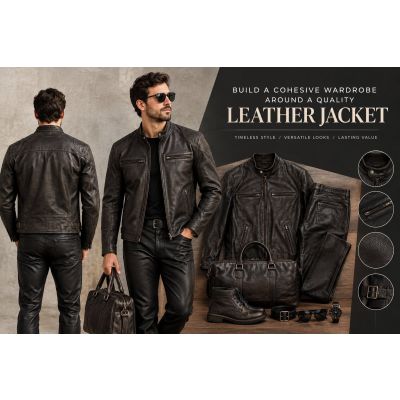
A leather jacket is one of the most versatile pieces you can own, but only if it fits well and matches your intended use. Building a leather jacket capsule wardrobe means choosing the right leather product first, then selecting complementary pieces that work together. Before you order, you need to understand how leather type, fit, construction, comfort, and your personal style all influence whether a leather jacket becomes a trusted everyday piece or an expensive mistake. This guide helps you make that decision by explaining what to check before ordering and how to choose a leather jacket that suits your body, climate, maintenance needs, and fashion goals.
Quick Buying Recommendation
A leather jacket capsule wardrobe works best for buyers who plan to wear leather regularly and want pieces that coordinate across seasons. If you live in a cold or temperate climate, a structured leather coat or jacket in a neutral color (black, brown, tan) can anchor your wardrobe. Buyers in warmer climates may prefer a lightweight lambskin or goatskin jacket for layering. First-time leather buyers should start with standard sizing if measurements match the size chart, or custom sizing if your proportions fall between standard sizes. Buyers with an existing wardrobe can add a second leather piece in a complementary shade or weight. Consider your actual wear frequency, maintenance comfort level, and budget before committing to multiple leather pieces.
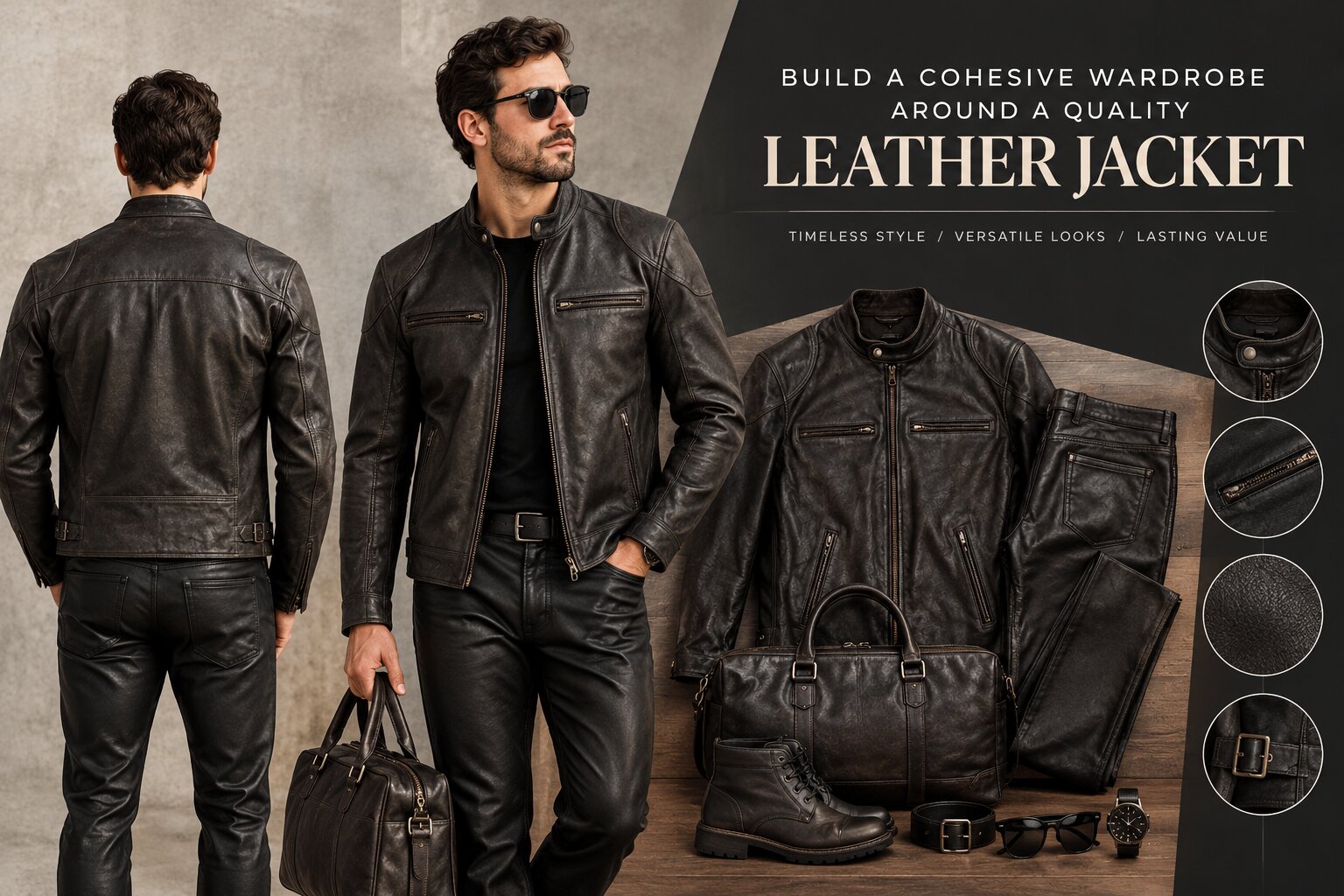
Table of Contents
- Choose the Right Leather Product for Your Needs
- Fit, Sizing, and Quality Features to Check
- Leather Type, Comfort, and Care
- Buying Mistakes and Why Consider Leather Collection
- Final Buying Guide and Next Steps
Choose the Right Leather Product for Your Needs
Building a capsule wardrobe around a leather jacket starts with selecting the right base piece for how you actually live. An everyday leather jacket for casual wear differs from a structured leather coat for winter, which differs again from a lightweight leather vest for layering in warmer months. Your first choice should be based on climate, intended use, how often you plan to wear it, and your personal style.
If you live in a cold climate and want a winter-ready piece, a leather coat or heavy-weight jacket in cowhide or buffalo leather can provide structure and durability. If you prefer something lighter for layering or transitional weather, a lambskin or goatskin jacket offers softness and flexibility without bulk. Buyers in warmer climates might choose a leather vest or lightweight jacket that works over t-shirts or light layers without adding too much warmth.
Beyond the jacket itself, consider what complementary pieces make sense. A leather skirt, leather pants, or leather vest can extend your capsule if you wear leather regularly. A leather bag and matching leather wallet create a coordinated look. Leather accessories like belts or gloves complete the wardrobe. However, not every buyer needs multiple leather pieces. If you wear leather only occasionally, one well-fitted jacket in a neutral color may be enough. If you wear leather frequently and want a coordinated look, a second piece in a complementary shade or weight can work well.
Buyers ready to compare leather fashion options can review
to explore styles based on fit, craftsmanship, and intended use.Fit, Sizing, and Quality Features to Check
Fit is the most important factor in a capsule wardrobe because a poorly fitting leather jacket will not coordinate well with other pieces and will feel uncomfortable. A leather jacket should allow comfortable arm movement without pulling across the shoulders or back. The chest should feel snug but not tight, the waist should sit at your natural waist or slightly above, and the sleeves should end at your wrist bone. Too loose and the jacket loses its shape and structure. Too tight and you cannot move freely, and stress concentrates around seams, zippers, and closures.
Standard sizing works well when your measurements match the size chart exactly. Custom sizing can improve fit when your measurements fall between standard sizes, when you have unusual proportions, or when you want to adjust sleeve length, shoulder width, or waist placement. Measure your chest, waist, hips, shoulder width, sleeve length, and overall jacket length carefully before ordering. If measurements fall between two sizes, contact support to discuss whether standard sizing or custom sizing is the better choice.
Beyond fit, check these construction features before ordering:
- Leather: Verify the leather type, grain, finish, weight, and how it feels. Natural leather may show variations in grain, texture, and color. Check the product description to understand what to expect.
- Construction: Look for even stitching, reinforced seams, quality lining, and secure hardware. Zippers, buttons, snaps, and buckles should move smoothly and feel durable.
- Fit: Confirm how the garment should sit on your body according to the product style. A fitted jacket sits differently than a relaxed or oversized style.
- Comfort: Check the lining material, weight, and flexibility. A heavy lining can restrict movement; a thin lining may feel uncomfortable against skin.
- Function: Verify pocket placement, closure types, and whether the jacket is adjustable at the waist or cuffs. These details affect how the jacket works in your daily life.
Buyers should check the product size guide, compare measurements to their own body, and contact support if they have questions about fit or construction. A poor fit will affect how the jacket looks and feels, and how well it coordinates with other wardrobe pieces.
Leather Type, Comfort, and Care
Your leather jacket capsule wardrobe depends partly on which leather type you choose and whether you are willing to maintain it. Full-grain leather retains more of the natural surface and can develop character with regular wear, showing small changes in color and texture over time. Top-grain leather is finished or corrected to create a more uniform surface while retaining useful leather characteristics. Lambskin and sheepskin are often chosen for their soft, supple feel and lighter weight, making them good choices for layering. Cowhide is generally more structured and durable, suiting buyers who want a firmer leather garment that holds its shape. Goatskin can offer a balance of flexibility, texture, and durability. Buffalo leather is often thicker and more structured, depending on the tanning method and product design.
Leather choice depends on what matters most to you: softness, structure, weight, appearance, intended use, climate, maintenance, and budget. A soft lambskin jacket feels luxurious but may require more careful handling. A structured cowhide jacket holds its shape better and may suit frequent wear. A top-grain jacket offers a middle ground between natural character and uniform appearance.
Comfort in a leather jacket depends on more than just the leather itself. The lining material affects how the jacket feels against your skin. Leather weight affects how much the jacket restricts movement. Garment cut and sleeve design affect arm movement. Pocket placement affects function. Closures that are too tight or stiff can be uncomfortable. Review all these factors when choosing a leather jacket for your capsule wardrobe.
Leather care is important and varies by leather type and finish. Keep leather away from unnecessary moisture and direct heat. Follow the care instructions supplied with the product. Use suitable leather conditioners when recommended by the product guide. Store leather in a cool, dry place away from sunlight. Do not use household cleaning products unless they are specifically suitable for the leather type. Natural leather may develop small changes in appearance over time. Damaged leather may require professional repair or servicing. Buyers who are unwilling or unable to provide basic care should reconsider whether leather is the right choice for their wardrobe.
Buying Mistakes and Why Consider Leather Collection
Avoid these common mistakes before ordering a leather jacket for your capsule wardrobe:
- Choosing by appearance only: Check intended use, fit, leather type, and construction. A beautiful jacket that does not fit or suit your lifestyle will not work in your wardrobe.
- Ignoring body measurements: Guess sizing leads to poor fit. Measure carefully and compare to the size chart. Contact support if measurements fall between sizes.
- Choosing leather without checking its characteristics: Different leather types feel, age, and require different care. Understand what you are buying before ordering.
- Assuming all leather feels the same: Lambskin, cowhide, and goatskin have different weights, textures, and flexibility. Choose based on how the leather will feel in your intended use.
- Ignoring lining and comfort: Poor lining or uncomfortable fit will keep you from wearing the jacket. Check these details before ordering.
- Not checking stitching and seams: Poor construction fails faster. Look for even stitching, reinforced seams, and quality closures.
- Not checking care requirements: High-maintenance leather requires regular conditioning and careful storage. Confirm you are willing to provide this care.
- Ignoring climate and weather conditions: A leather jacket suitable for dry winters may not work in a wet climate. Consider your actual weather when choosing leather type and finish.
Leather Collection focuses on handcrafted and made-to-order leather fashion products with attention to custom sizing, leather construction, functional design, and fit details. The brand offers custom leather jackets, leather coats, leather vests, leather pants, leather skirts, leather kilts, leather bags, leather wallets, and leather accessories. Many products are available in both standard and custom sizing, allowing buyers to adjust fit based on their actual measurements and proportions.
Leather Collection supports buyers by providing detailed product descriptions, size guides, and the ability to contact support with questions about fit, leather type, construction, or customization options. The brand's focus on handcrafted leather and made-to-measure options makes it suitable for buyers who want to compare fit and features carefully before ordering, or who need custom sizing to achieve a proper fit for a leather jacket capsule wardrobe.
Final Buying Guide and Next Steps
Building a leather jacket capsule wardrobe starts with one well-chosen piece. Follow these steps to make the right decision: First, identify your intended use. Will you wear a leather jacket daily, seasonally, or occasionally? Second, choose the right product type based on climate and style. A structured coat for winter, a lightweight jacket for layering, or a vest for versatility. Third, select suitable leather based on softness, durability, weight, and your willingness to maintain it. Fourth, measure your body carefully using the size guide provided. Fifth, decide between standard and custom sizing based on how your measurements compare to the size chart. Sixth, check stitching, seams, lining, and closures. Seventh, review leather care requirements and confirm you can provide this care. Eighth, consider climate and weather conditions. Ninth, compare product details and contact support if you have questions.
Once you have chosen the right leather jacket, adding complementary pieces is easier. A second leather piece in a coordinating shade or weight, a leather bag that matches your jacket, or leather accessories can extend your capsule wardrobe. However, start with one quality piece that fits well and suits your intended use. A well-fitted leather jacket in a neutral color can work with many outfits and will remain useful for years if you choose the right leather, fit, and construction.
For buyers who want to review a real leather product before ordering,
provides a practical example of how leather, fit, construction, and design come together in a finished product. Explore the size guides, product descriptions, and customization options to understand how to build a leather jacket capsule wardrobe that suits your body, style, and lifestyle.Frequently Asked Questions
Which leather type is best for a leather jacket capsule wardrobe?
The best leather type depends on your climate, intended use, and maintenance comfort. Full-grain leather develops character with wear but may show more variation. Top-grain leather offers a more uniform surface with good durability. Lambskin is soft and lightweight but requires careful handling. Cowhide is structured and durable for frequent wear. Goatskin offers balance between softness and durability. Choose based on how you plan to wear the jacket and what feel and appearance matter most to you.
Should I choose standard or custom sizing for a leather jacket?
Choose standard sizing if your measurements match the size chart exactly. Custom sizing can help if your measurements fall between standard sizes, if you have unusual proportions, or if you want to adjust specific areas like sleeve length or shoulder width. Measure carefully before deciding. Contact support if measurements fall between two sizes to discuss which option will fit better. Custom sizing can improve fit when measurements are accurate, but it is not necessary for every buyer.
How should a leather jacket fit for a capsule wardrobe?
A leather jacket should allow comfortable arm movement without pulling across the shoulders or back. The chest should feel snug but not tight, and the waist should sit at your natural waist or slightly above. Sleeves should end at your wrist bone. The jacket should not be so loose that it loses shape or so tight that it restricts movement or creates stress on seams and closures. Proper fit affects how the jacket looks, feels, and coordinates with other pieces in your wardrobe.
How can I tell if a leather jacket is well made?
Check for even stitching with no loose threads or gaps. Seams should be reinforced and straight. The lining should be attached securely and feel smooth against skin. Zippers, buttons, snaps, and buckles should move smoothly and feel durable. Pockets should be secure and functional. Edge finishing should be neat and consistent. Leather should feel appropriate for its type—soft lambskin, structured cowhide, or balanced goatskin. Read product descriptions and contact support if you have questions about construction quality.
How should I care for a leather jacket in my capsule wardrobe?
Keep leather away from unnecessary moisture and direct heat. Follow the care instructions supplied with the product. Use suitable leather conditioners when recommended. Store leather in a cool, dry place. Do not use household cleaning products unless specifically suitable for the leather type. Avoid excessive folding or compression. Natural leather may develop small changes in appearance over time. Damaged leather may require professional repair. Regular basic care helps maintain appearance and extends usable life, but leather is not maintenance-free.