
 USA
USA  Canada
  Brazil
  Germany
  France
  Italy
Italy  Switzerland
  Sweden
  Spain
Spain  Great Britain
  Norway
  South Africa
  Japan
Japan  New Zealand
  Australia
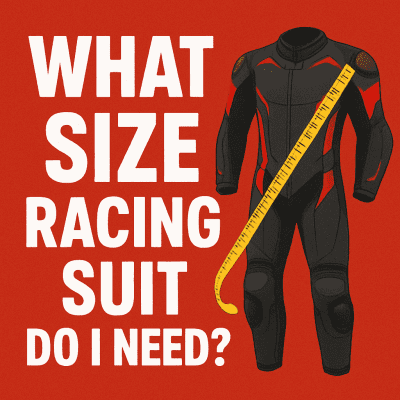
Stepping onto a racetrack is an exhilarating experience, but before you twist the throttle, you must ensure your armor is up to the task. One of the most common hurdles for riders—both novices and veterans—is determining exactly what size racing suit they need. Unlike casual wear, a motorcycle suit follows a unique set of rules where "roomy" translates to "risky."
As outlined in the technical guide by Leather Collection, the difference between a suit that fits and a suit that protects lies in the precision of your measurements.
The Philosophy of the "Second Skin"
To understand what size you need, you must first understand how a suit is supposed to function. A is designed to be a technical exoskeleton. Its primary job is to hold abrasion-resistant leather and impact-absorbing armor tight against your body.
If a suit is too large, the leather can bunch up during a slide, creating "folds" that catch on the asphalt and cause you to tumble. More importantly, oversized suits allow internal protectors at the knees and elbows to rotate away from the joint during an impact. Therefore, your ideal size is the one that offers a snug, "second skin" fit.
The Standard Sizing Conflict
Most manufacturers use European (EU) or US sizing (e.g., EU 52 vs. US 42). However, sizing charts are not universal. A "Size 50" from one brand may feel significantly different from another due to variations in:
-
Chest-to-Waist Ratio: Some brands favor an athletic, V-shaped cut, while others are more "American cut" with more room in the midsection.
-
Inseam Length: The distance from the crotch to the ankle varies wildly between "short," "standard," and "tall" iterations of the same size.
-
Torso Height: This is often the most critical measurement for one-piece suits; if the torso is too short, the suit will pull painfully on your shoulders and crotch.
How to Measure Yourself for a Racing Suit
Before looking at a chart, you need hard data. Grab a soft measuring tape and a friend to help—measuring yourself often leads to inaccuracies.
Key Measurements Required
-
Chest: Measure around the fullest part of your chest, keeping the tape under the arms.
-
Waist: Measure around your natural waistline, usually right above the belly button.
-
Hips: Measure around the widest part of your hips/seat.
-
Inseam: Measure from the crotch down to the ankle bone. Note that racing suits are intentionally shorter than jeans so they don't bunch up inside your boots.
-
Torso Loop: Measure from the collarbone, down through the crotch, and back up to the starting point. This is vital for one-piece suit comfort.
Common Sizing Pitfalls to Avoid
When trying to decide on a size, many riders fall into traps that result in a poorly fitting suit.
Don't Size Up for Comfort
A new should feel slightly restrictive when you first put it on. High-quality cowhide will stretch and "break in" by about 5% to 10% over the first few rides. If a suit feels perfect and comfortable the moment you take it out of the box, it will likely be too loose after a month of track days.
Account for Base Layers and Protection
When checking your size, remember to factor in:
-
Back Protectors: If you plan on wearing a standalone CE-Level 2 back protector, ensure your chest measurement accounts for that extra inch of thickness.
-
Base Layers: Always measure while wearing the moisture-wicking undersuit you intend to use on the track.
-
Body Weight Fluctuations: If you are in the middle of a fitness journey, consider how a size change might affect the suit's longevity.
Final Thoughts: The Custom Alternative
If you find that your measurements are consistently between sizes—perhaps you have a large chest but short legs—standard off-the-shelf sizing may never provide the safety you require. In these cases, a custom-made suit is the most logical step to ensure every protector is perfectly aligned.
As Leather Collection highlights, the right size isn't just a number on a tag; it's the specific geometry that keeps you safe at triple-digit speeds.